[01] The City as a Recurring Setting
Noir is overwhelmingly an urban style. Where a western needs open land and a horror film often needs isolation, noir needs density: crowded streets, close-packed buildings, and enough strangers passing through a scene that any one of them could plausibly be a threat, a witness, or both.
The city in noir is rarely neutral scenery. It is written and shot as an active pressure on the characters inside it, closing in through tight framing, blocking sightlines with rain and steam, and offering few places a character can be genuinely alone or safe.
[02] A Small Set of Recurring Locations
Within that urban setting, a handful of specific location types recur often enough to carry their own shorthand meaning.
| Location | Symbolic role |
|---|---|
| The private investigator's office | A worn, unglamorous base of operations, signalling a character who works alone and outside institutional protection |
| The nightclub or bar | A place where information, money and danger change hands in the open, under cover of noise and low light |
| The rain-soaked street | A reflective, disorienting surface used to fracture and multiply light sources within a single shot |
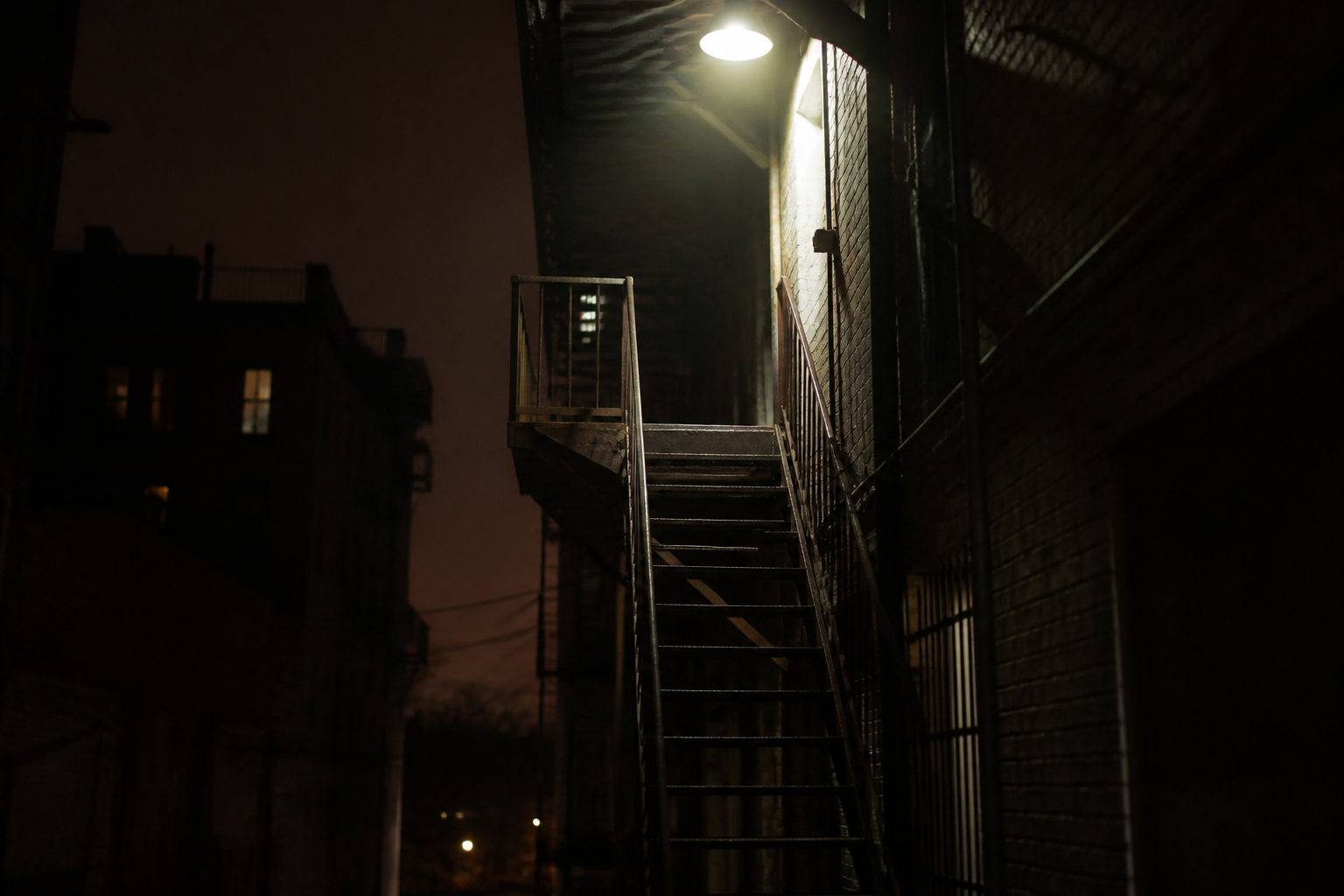
| The fire escape or alleyway | A cramped, vertical space used for pursuit, ambush or a character's last attempt to disappear |
[03] Why Los Angeles in Particular
A large share of classic noir was shot in and around Los Angeles, and the reasons are as much practical as artistic. Major American studios were based there, which made local streets and backlots the cheapest and most convenient standing sets available. Raymond Chandler's Philip Marlowe novels, covered in chapter three, are set specifically in Los Angeles, reinforcing the association for readers and later filmmakers who adapted his work.
The city's own character helped too. Los Angeles in the 1940s combined Hollywood glamour with rapid, uneven urban sprawl and stark economic contrast between neighborhoods, a combination critics often cite as a natural visual match for noir's interest in appearances that do not hold up under scrutiny.
[04] Terms Used in This Chapter
- Backlot
- A studio-owned outdoor set built to resemble city streets, reused across many productions rather than built fresh each time.
- Day-for-night
- A filming technique using camera settings or filters to shoot a scene in daylight while making it read as nighttime on screen.
With lighting, character, narration and setting covered, part three follows what happened to all four once the classic period gave way to colour filmmaking and a new generation of directors.